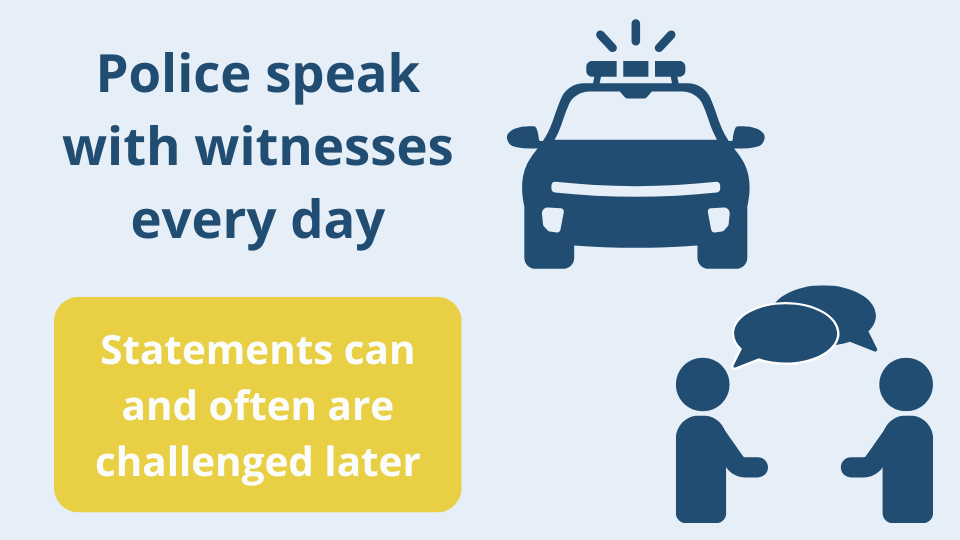
We saw this very thing in eyewitness accounts posted on social media and aired on television news, as well as AI-generated responses on the internet, following the assassination of conservative political activist Charlie Kirk. Some people reported multiple shots, misidentified possible suspects and theorized it was maybe even an operation carried out by both political parties to create more hatred and division toward the other.
If asked to give a written statement, read it carefully before signing. If you are unsure, say you’d like to wait until you’ve had time to collect your thoughts or speak with a lawyer. It is far better to provide a careful, accurate account later than to give a rushed or inaccurate statement that could come back to haunt you.
Keep Calm, Remain Respectful at All Times
Lawyers and civil rights groups agree: remaining calm, visible, and respectful during a police encounter is the best way to protect yourself. You are not required to provide more information than the law compels you to give, and anything you say can be used against you later. That’s why attorneys stress the importance of saying as little as possible until you have had time to calm down and, if necessary, consult legal counsel.
If the situation becomes serious—especially if you have used force in self-defense—state clearly, “I want to remain silent and speak to an attorney.” Federal case law requires you to invoke this right out loud. Then stop talking. Even police officers are given time before making a statement after a shooting; you deserve the same consideration.
Remember that refusing to answer questions or declining a search is not an admission of guilt. It is your constitutional right. Former Pinal County (Arizona) Sheriff Mark Lamb once put it plainly: “Be polite with your interaction with law enforcement, but do not hesitate to exercise your constitutional right and the 5th Amendment.”
Written by: Doug Howlett
 References & Further Reading:
Fox News. (2025, September). Charlie Kirk assassination timeline: Utah campus shooting details, attack, manhunt suspect. Fox News. https://www.foxnews.com/us/charlie-kirk-assassination-timeline-utah-campus-shooting-details-attack-manhunt-suspect
Reuters. (2025, September 11). Rumors, misinformation about Charlie Kirk killing rampant on social media. Reuters. https://www.reuters.com/world/us/rumors-misinformation-about-charlie-kirk-killing-rampant-social-media-2025-09-11/